Unseen Media was an initiative to integrate augmented reality into tabletop mystery games. Players received a ship-to-home box of physical clues to investigate the death of "Charlotte Depsi," combined with web-based AR tools and an agent profile system for tracking progress through the narrative.
The concept originated as an escape room AR idea in mid-2017. After conducting 100+ customer interviews, we pivoted to a mail-to-home format to overcome the location and time constraints of physical venues and reach a broader market.
The project was selected for NYU's Fall 2017 Prototyping Fund, NYC Media Lab's inaugural XR Startup Bootcamp, the XR Beta Residency Program at RLab (Brooklyn Navy Yard), and Augmented Reality Expo 2019 in Santa Clara.
Unseen Media product demo video
I served as product designer and researcher, where I conducted customer interviews, lead competitive analysis, designed AR interfaces, and iterated on the physical and digital product based on playtesting feedback.
We conducted 100+ interviews with potential customers to understand what they wanted from a mystery game experience. Our original escape room concept showed strong interest but limited scalability - testing quickly revealed that at-home mystery games had far better market reach.
Interview notes were synthesized to identify the core values driving purchase decisions.
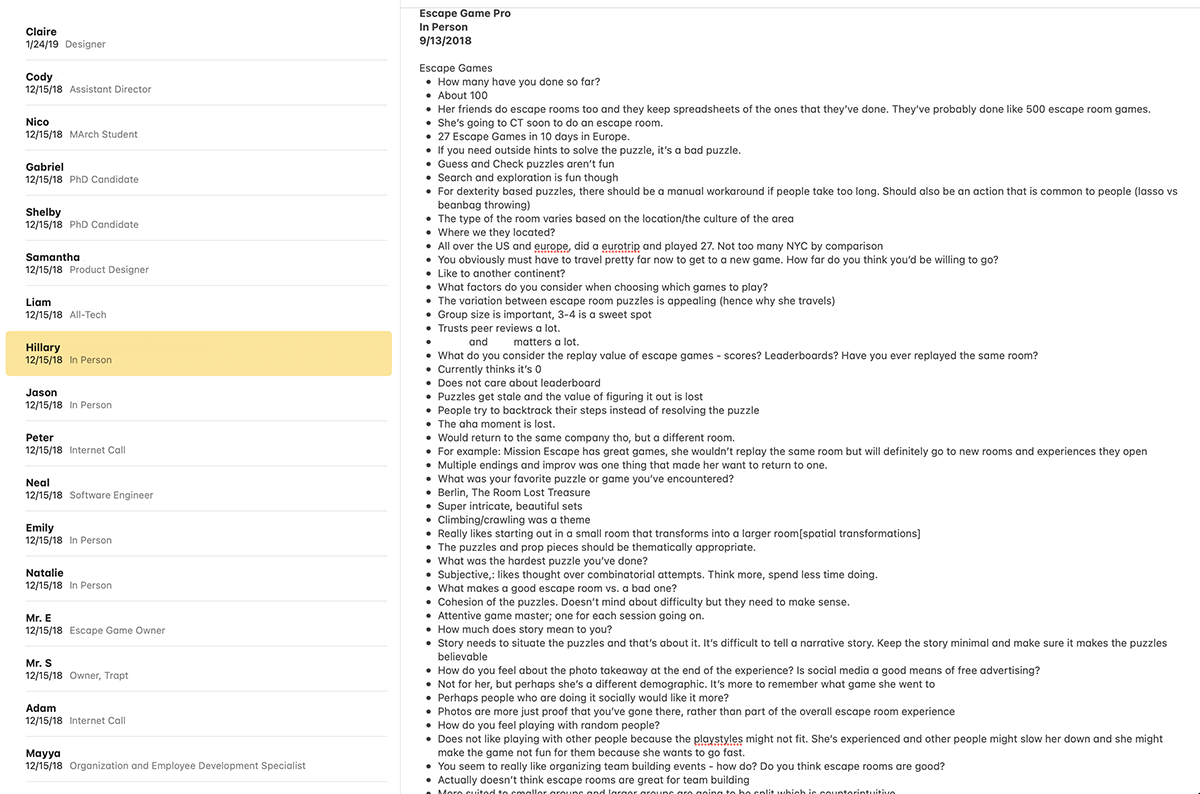
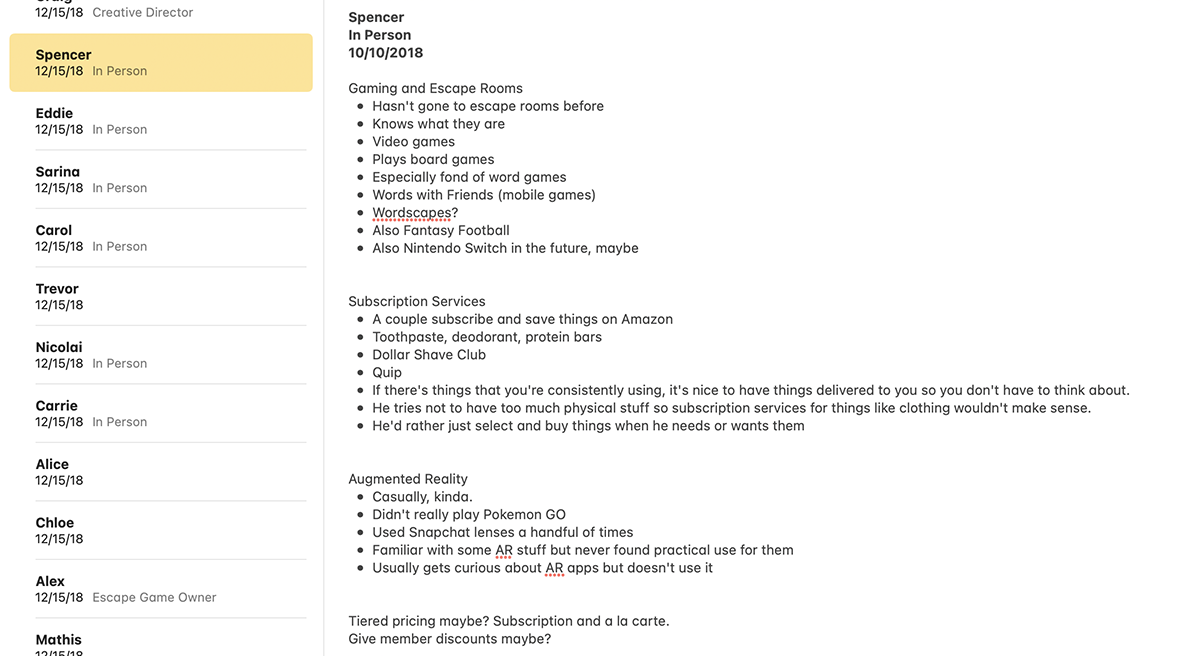
Customer interview notes
Individual participant profile
Convenience, cost, and story emerged as the three factors customers cared about most.
Our early prototypes were designed to observe how users navigate semi-linear storylines through puzzles, and how they engage with AR elements embedded in a physical game.
Augmented reality elements required hand-holding for users encountering the technology for the first time
Puzzle design needed to prevent players from skipping ahead in the story sequence
Overly frustrating puzzles caused disengagement from the experience
I played through Hunt A Killer, The Mysterious Package Company, and Breakout Games to understand established conventions and identify gaps in the market.
Games use web and social platforms to extend the story into reality
Physical components initiate the experience while clues span multiple mediums
Password walls and code unlocks keep players from skipping too far ahead
Tangible objects provide satisfying interaction that pure digital cannot replicate
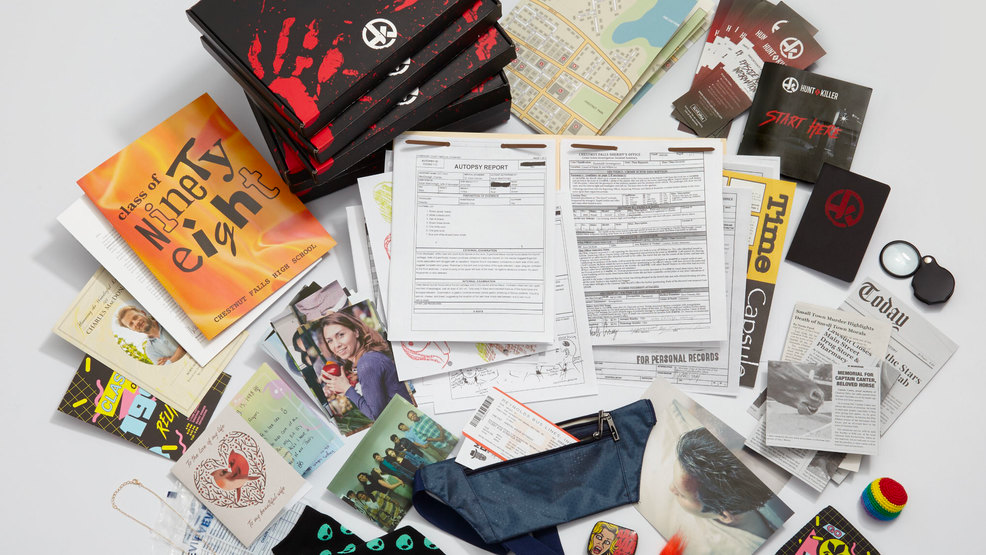
Hunt A Killer subscription box game pieces
AR was a emerging medium that many players encountered it for the first time through this product. Designing for it meant building intuitive interfaces and also actively educating users about AR within the experience itself.
Our design principles were: keep interactions simple, offer liberal on-screen text instructions whenever in doubt, and remind players that spatial movement — not just pinching to zoom — is possible in AR.
Based on customer discovery insights, we built a story-driven prototype around a real event: the Dyatlov Pass Incident, in which nine hikers mysteriously died in the Russian wilderness in 1959.
An extensive mind map was built to link puzzle interactions to story beats, and early game piece prototypes were developed and tested.
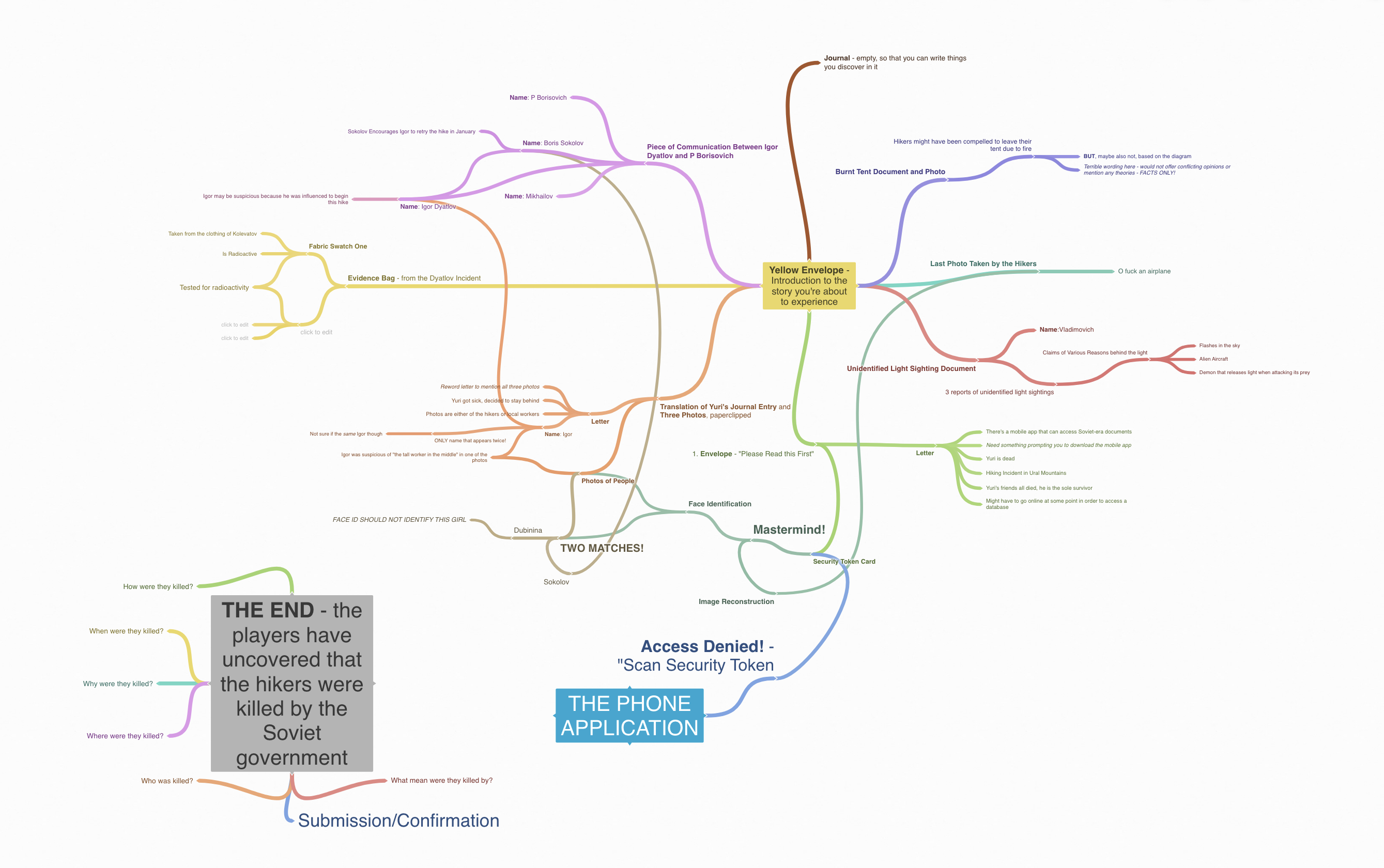
Mind map — Dyatlov story paths and puzzle connections
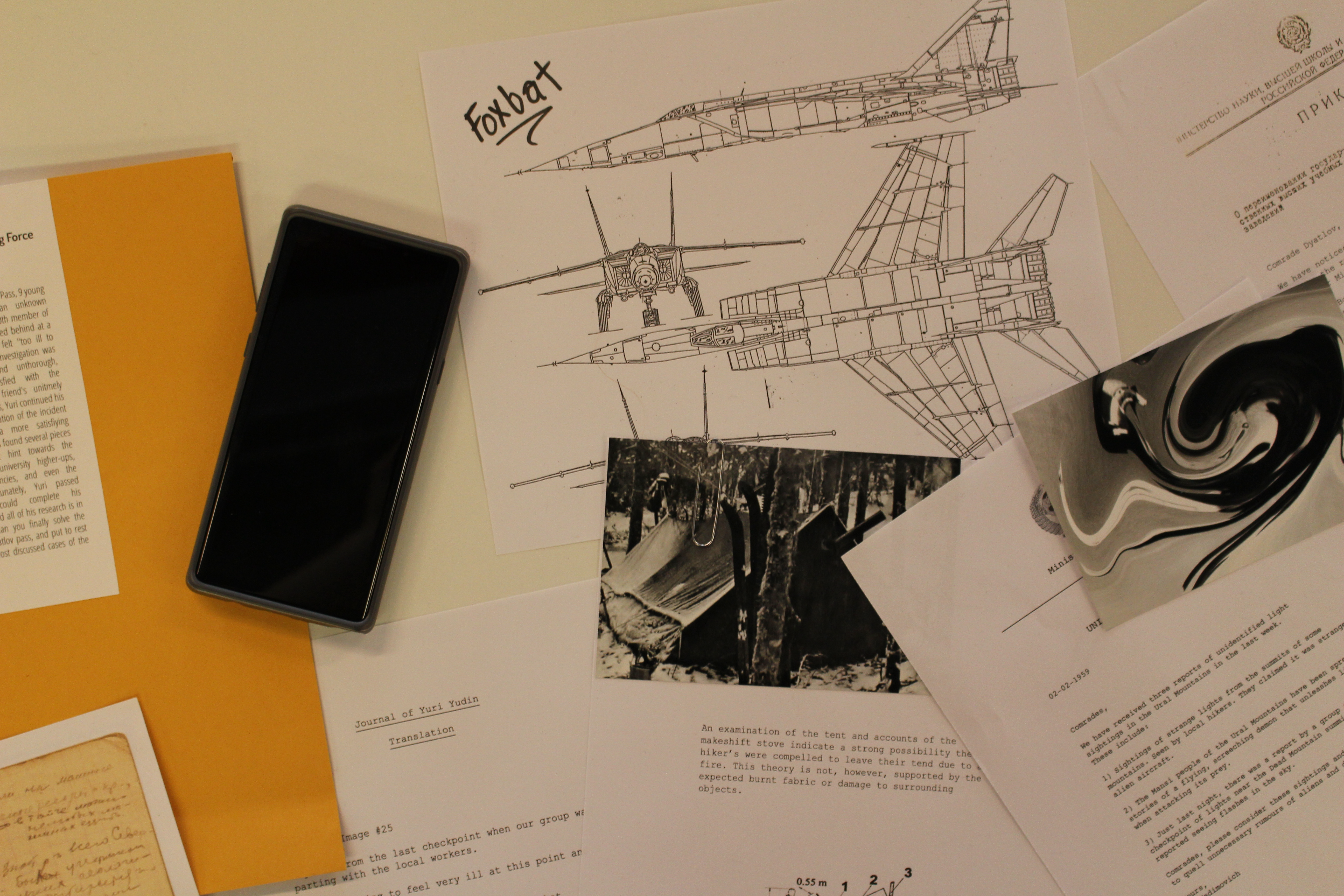
Early Dyatlov Files physical game piece prototypes
We ran unmoderated gameplay sessions at RLab events with a diverse mix of participants: AR/VR enthusiasts, students, casual gamers, and entrepreneurs.
Story elements drove high engagement throughout the session
Tactile puzzle components were universally appealing
The Unity app excluded players with older phones due to compatibility issues
Web-based elements were navigated easily by most users
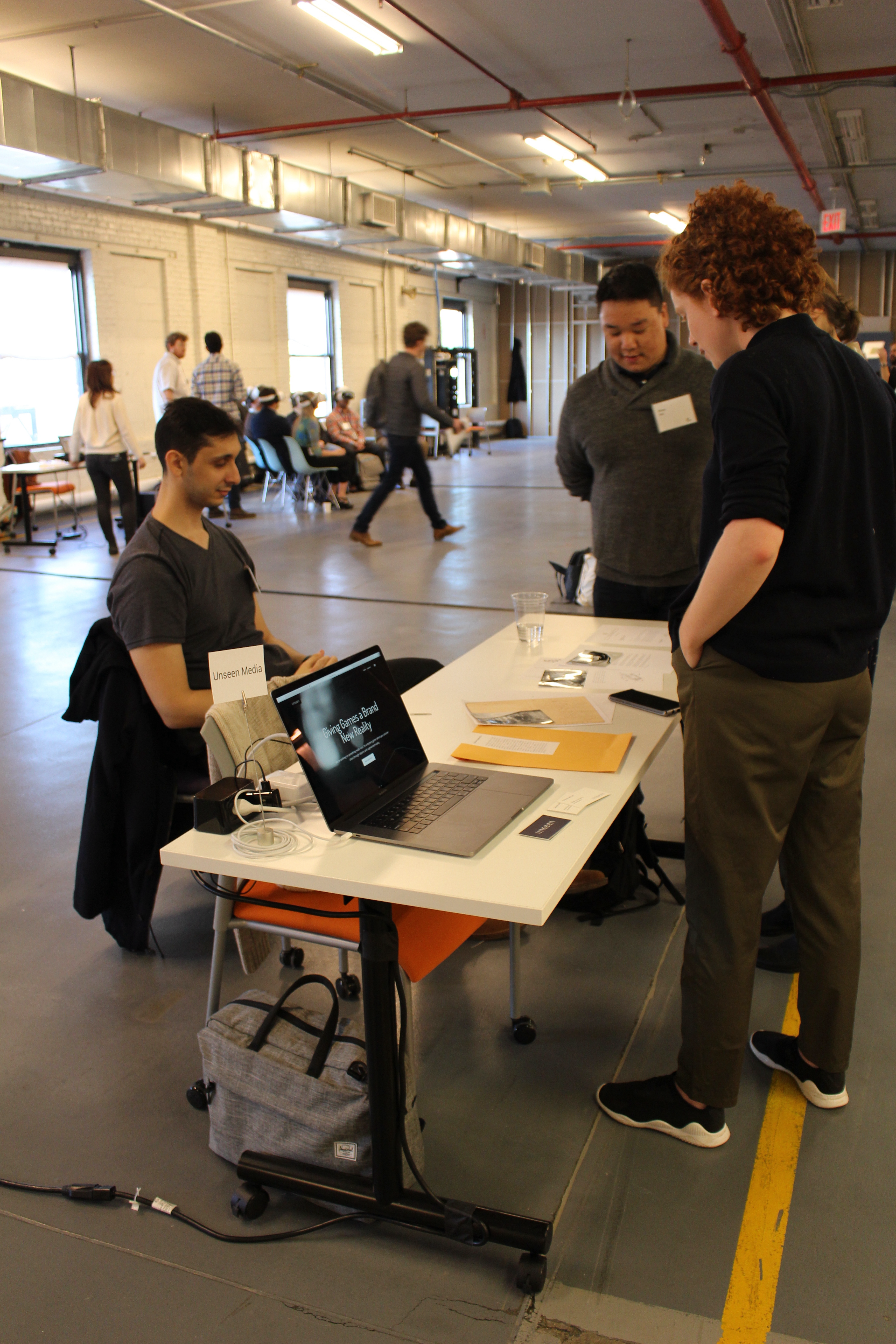
Demo session at RLab, Brooklyn Navy Yard
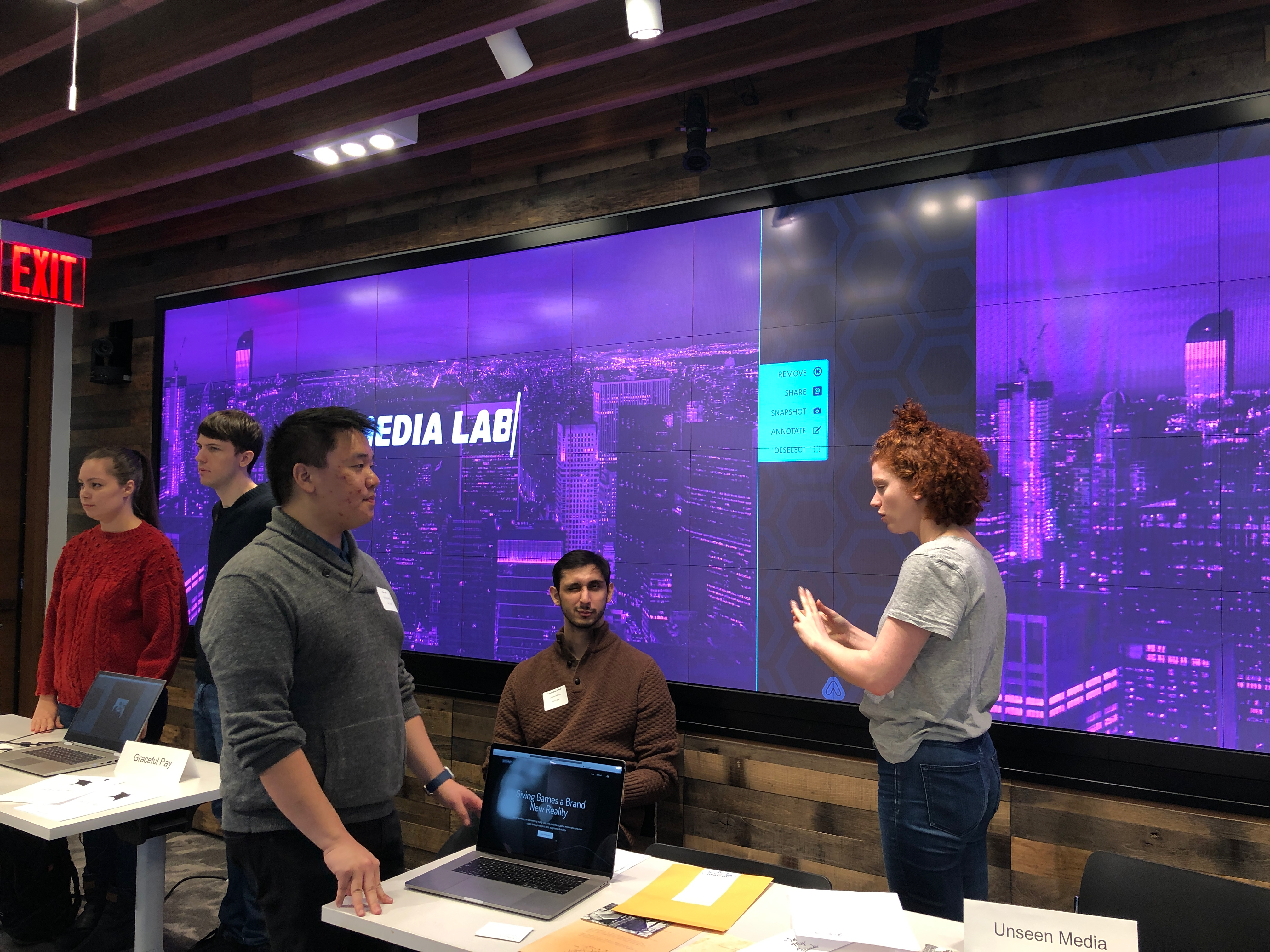
Demo session at R/GA Hudson Yards office
Extensive playtesting surfaced three clear areas requiring redesign before we could move to the next prototype.
Envelope and paper materials felt cheap and undermined the premium experience
AR didn't fit the historical 1950s Russian setting — the technology felt anachronistic
Players wanted more hands-on interactive elements and less reading
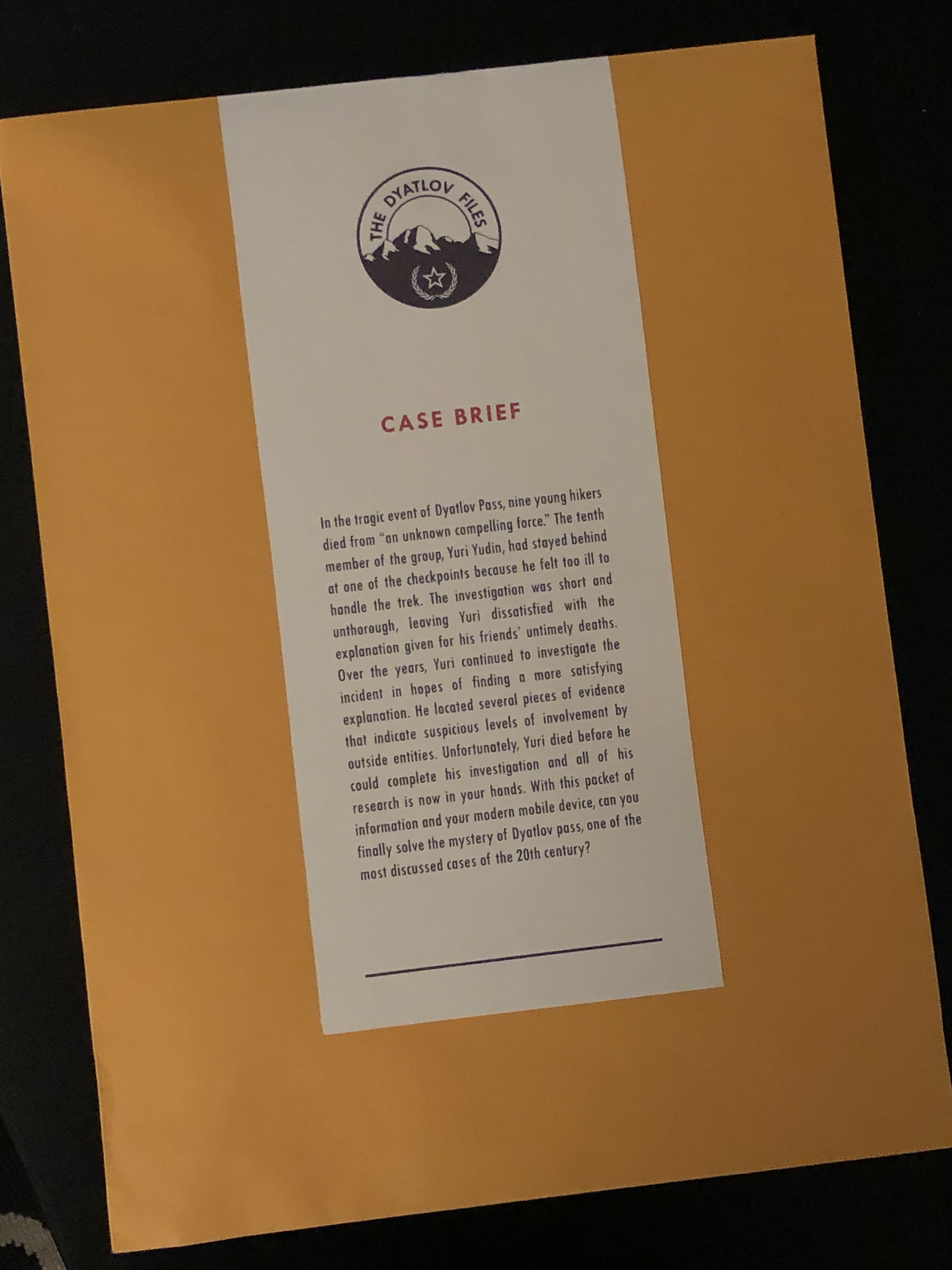
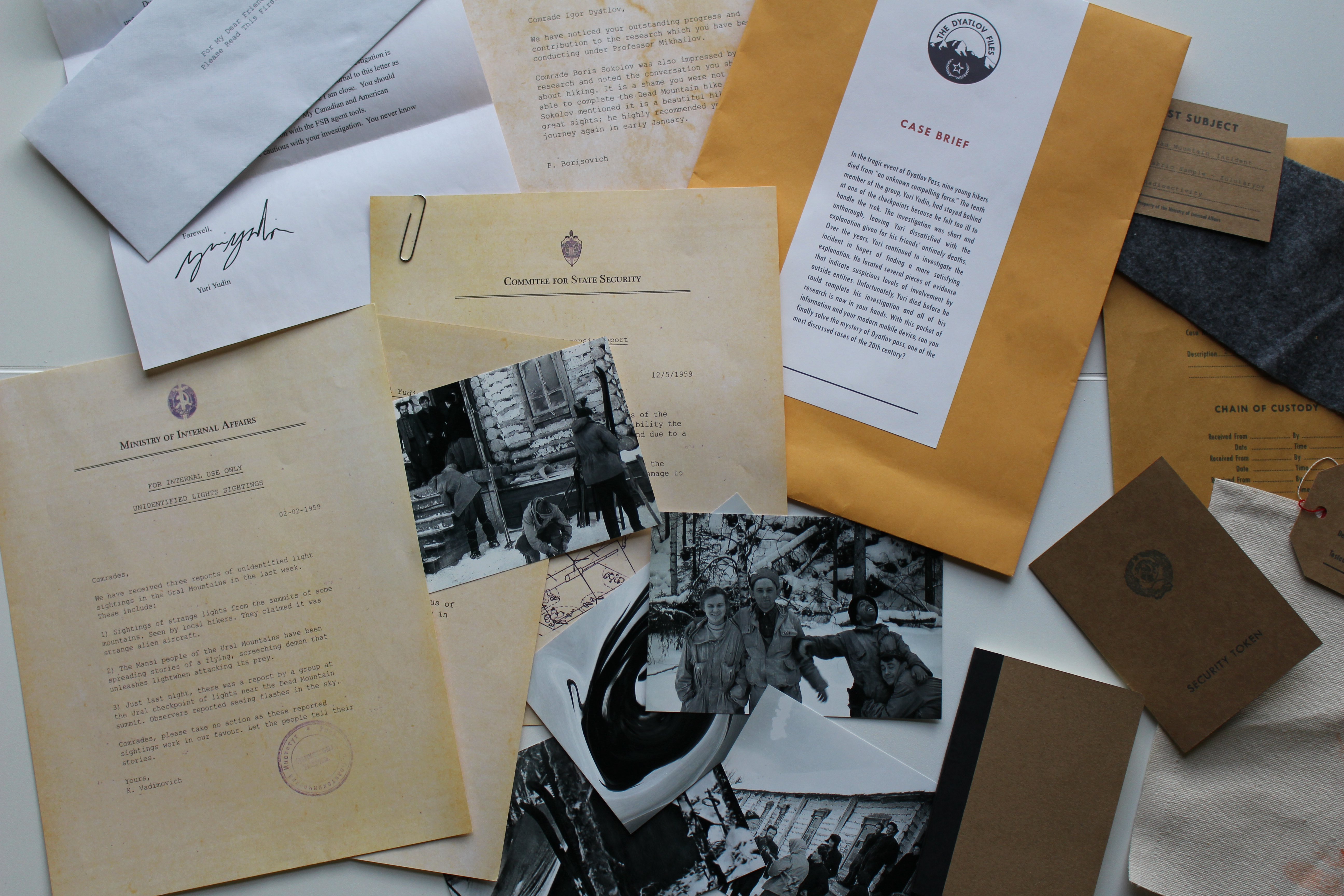
Dyatlov Files — outer envelope
Dyatlov Files — box contents spread on tabletop
Designing AR wireframes presented unique challenges wherein traditional static wireframing couldn't capture spatial interaction and motion. This required heavier visual communication and close collaboration with developers.
A key principle was to draw from real-world names and metaphors (hacking tools, scanning devices) to ease users into unfamiliar AR interactions before introducing more abstract ones.
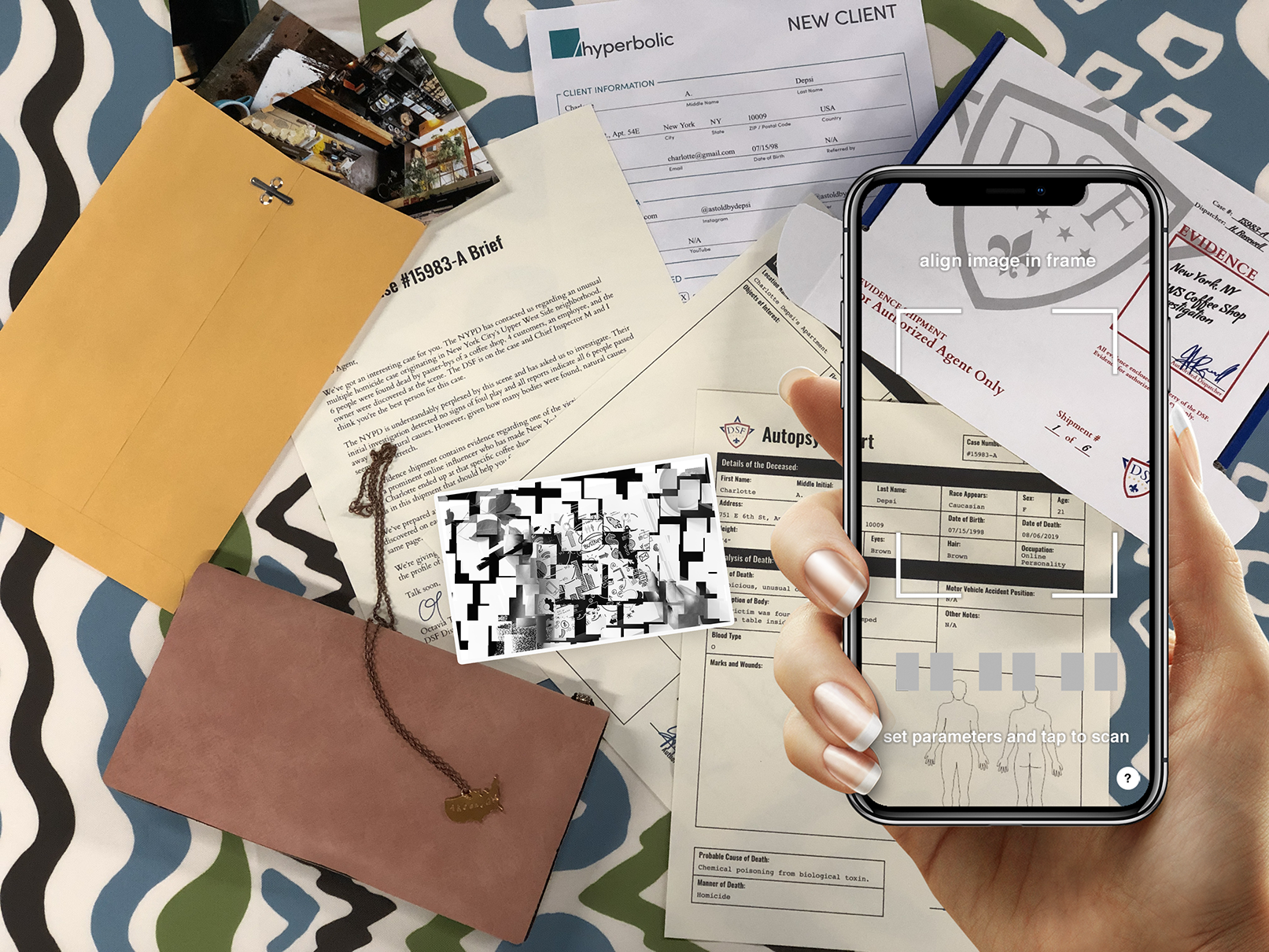
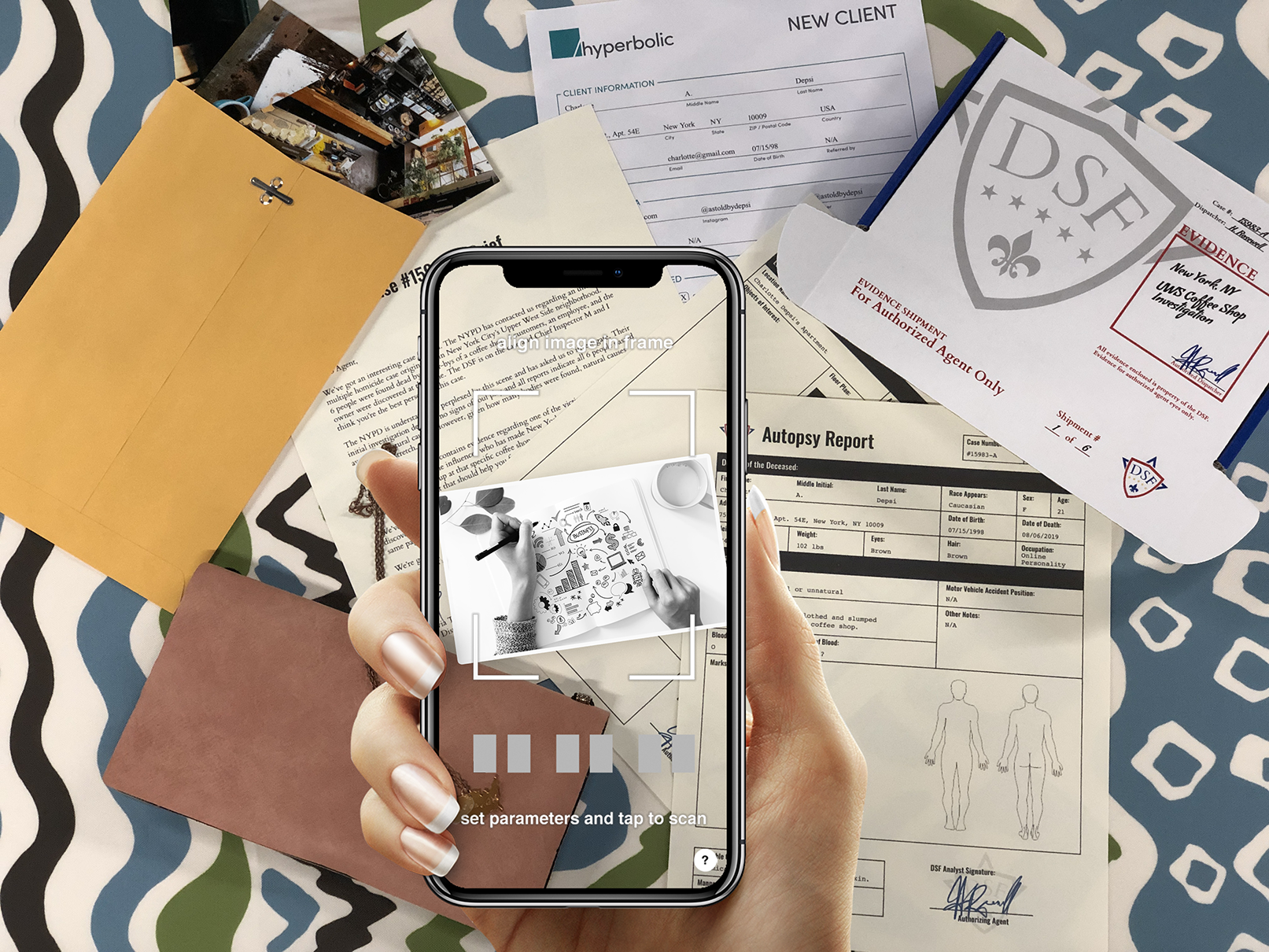
Scanning scrambled documents
Documents unscrambled
We moved to a higher-fidelity boxed prototype, commissioned a professional writer for a more compelling mystery narrative, and partnered with 8th Wall to deliver web-based AR on any device which eliminated the Unity compatibility issues entirely.
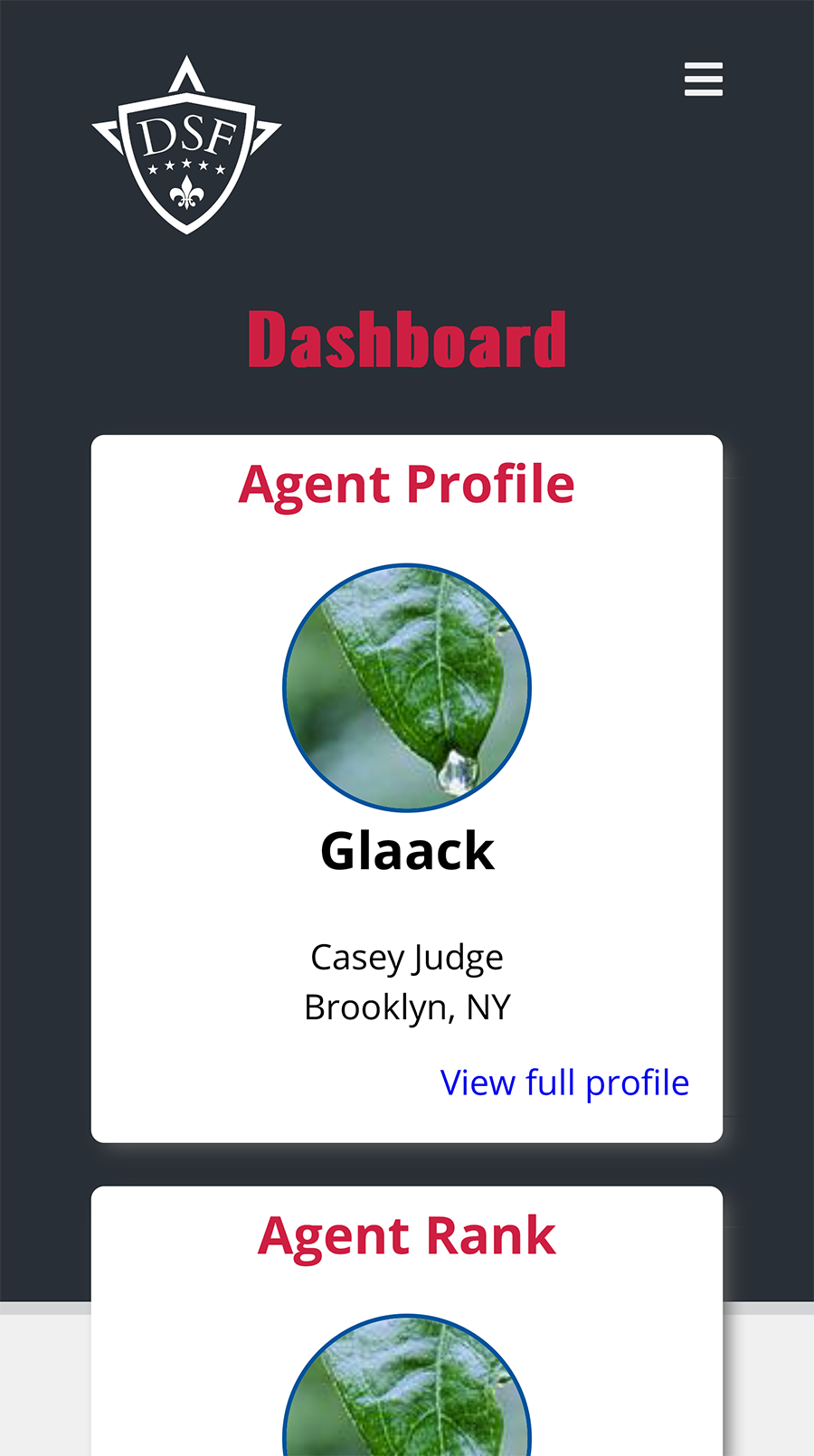
This version added multiple web puzzles, an Instagram profile for fictional character Angelica Greenstone, and the DSF Agency Agent Portal for tracking case progress.
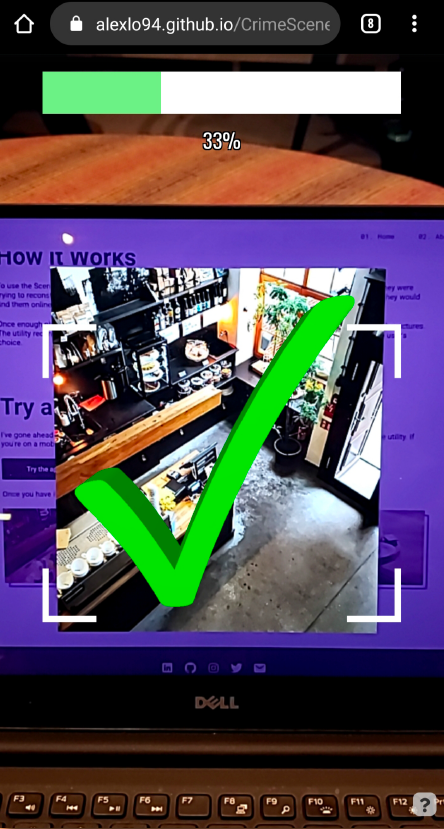
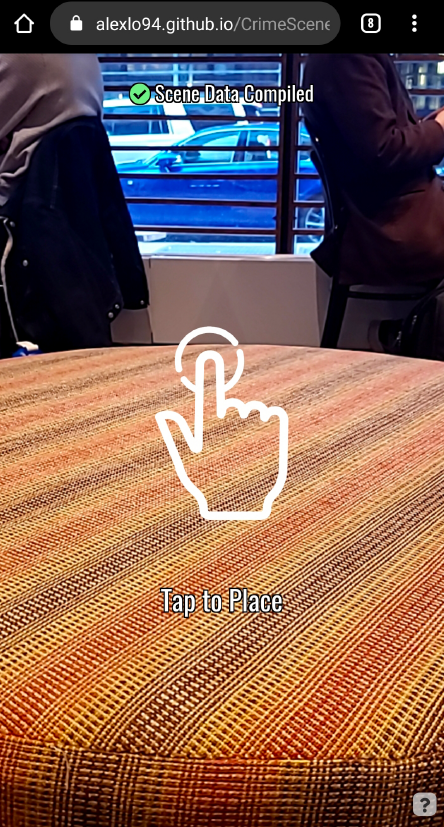
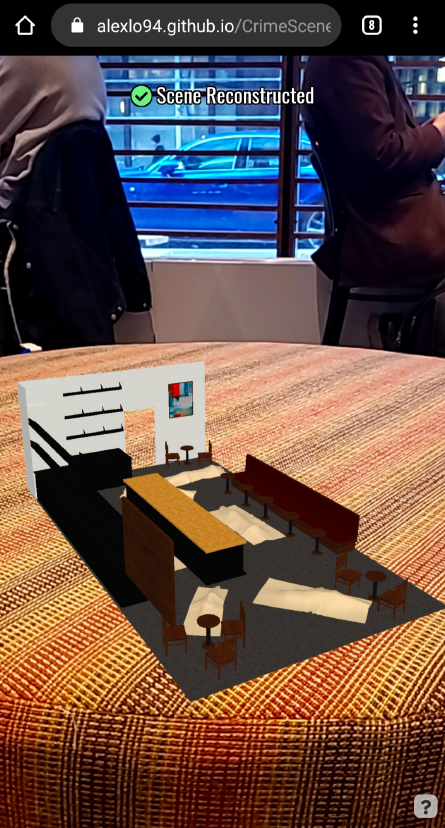
Scan recognized
Tap to place
3D model placed
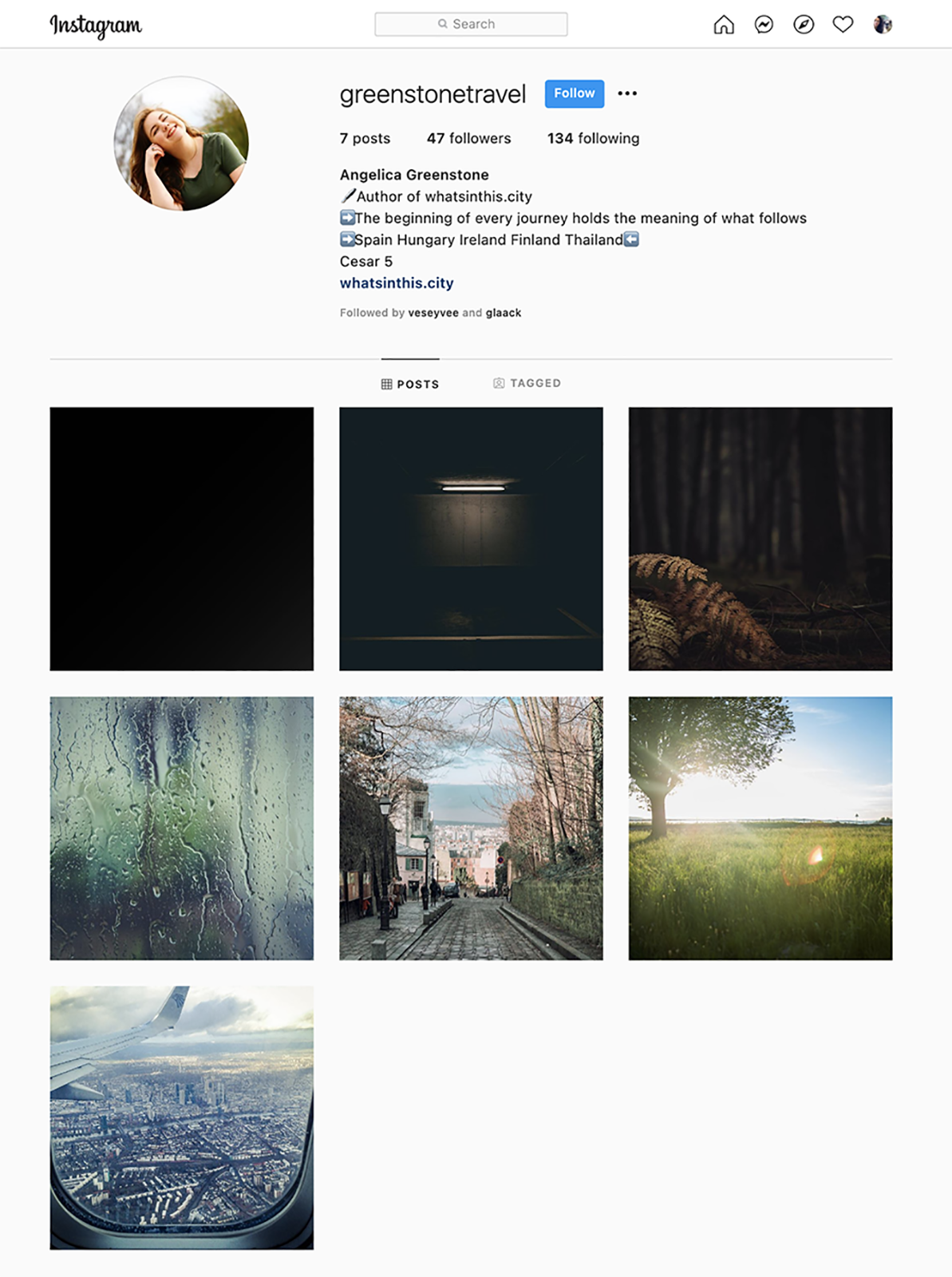
Instagram profile — Angelica Greenstone
DSF Agency Agent Portal web interface
Through RLab connections we participated in multiple NYC AR/VR community events, running observed playtesting sessions at Halloween Play 2019 and other demos. A key lesson was that we needed to separate excitement about the technology from genuine product evaluation.
Our preferred method became unmoderated, closely observed sessions followed by in-depth interviews.
Users defaulted to pinch-to-zoom rather than physically moving closer to AR objects
Framing AR tools as CSI-style hacking devices significantly enhanced enjoyment
Identified partnership opportunities with licensed content providers and educational institutions
A help modal was essential as users frequently needed guidance mid-AR-interaction
Clear written prompts consistently outperformed implicit navigational cues
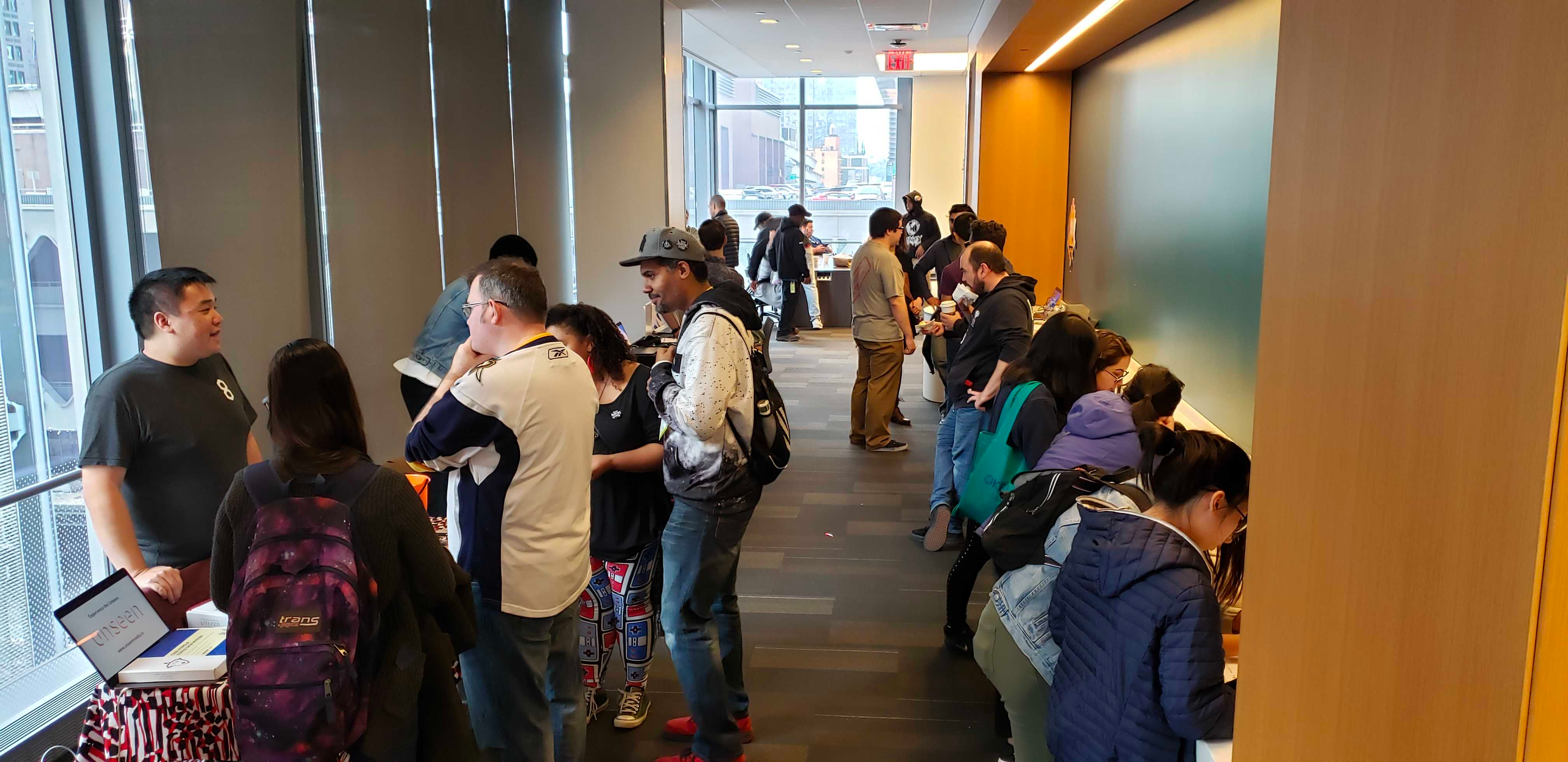
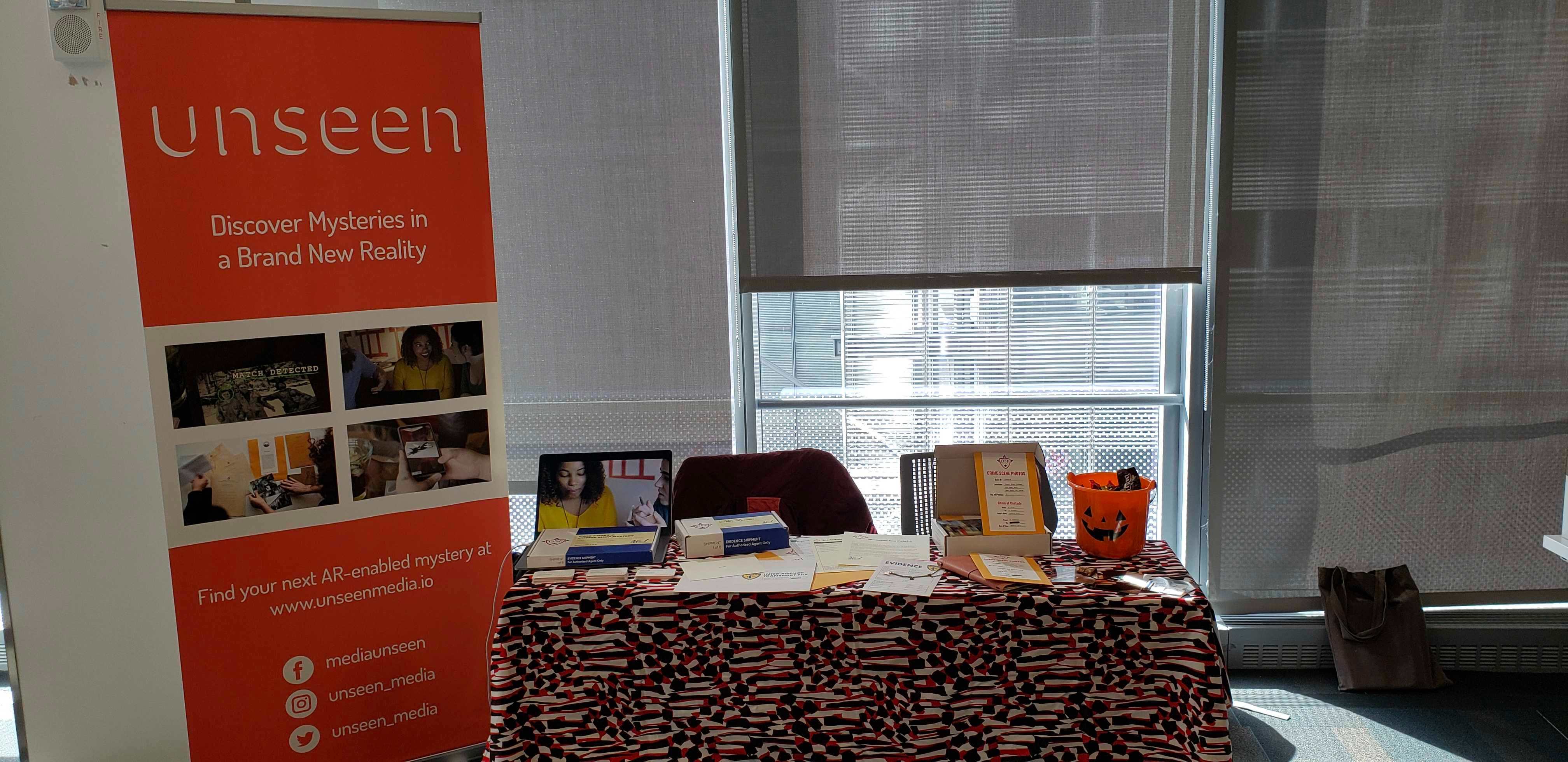
Unseen Media demo table at Halloween Play 2019
Wider demo area at Halloween Play 2019
The final Charlotte Depsi mystery box shipped to players' homes, enabling small groups to work through physical clues, web puzzles, and AR experiences to solve the case.
91% of players completed the experience start to finish — a strong signal that the integration of physical and digital elements created genuine engagement.
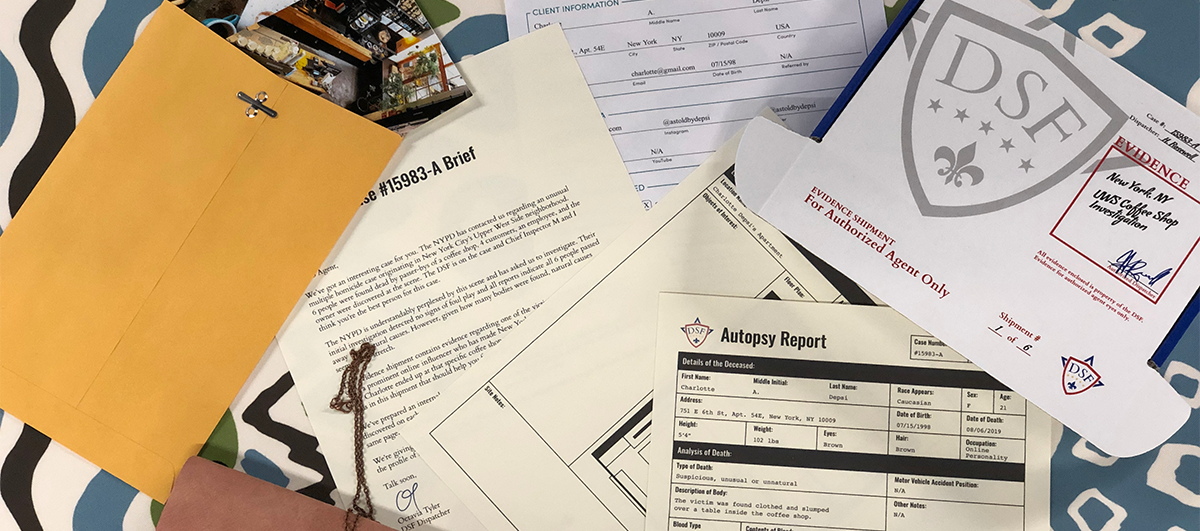
Final Charlotte Depsi mystery box contents